
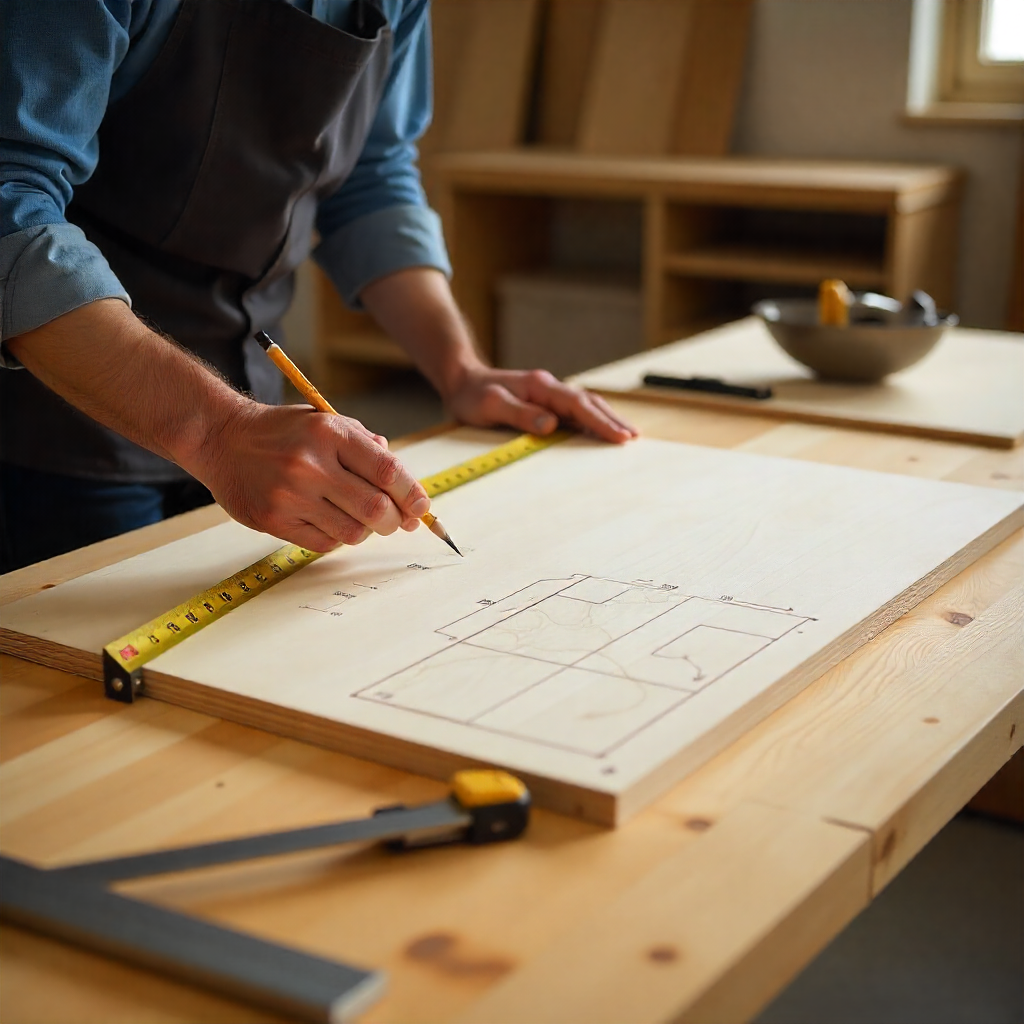
Calculating how many plywood sheets you need for a project seems simple at first, but most people either buy too little or far more than they require. Plywood comes in different sizes, thicknesses, and grades, and every project has its own measurements, cuts, and waste patterns. Whether you are building furniture, flooring a room, constructing cabinets, or working on a roofing job, getting an accurate estimate saves time, money, and material.
This guide will walk you through the complete process step by step, using simple formulas, real examples, and expert guidance. It follows professional carpentry practices and includes an internal link to our free tool, so you can calculate everything instantly using the Plywood Calculator at: https://anycalctool.com/plywood-calculator/
Understanding Standard Plywood Sheet Sizes
The most common plywood sheet size worldwide is 4 ft × 8 ft (1220 mm × 2440 mm). However, depending on your location and the type of work you’re doing, you might also find 5 ft × 5 ft, 4 ft × 10 ft, or custom-cut sheets. Knowing the sheet size matters because all calculations start from the total area one sheet covers.
A standard 4×8 sheet covers 32 square feet.
A 5×5 sheet covers 25 square feet.
A 4×10 sheet covers 40 square feet.
When planning your project, always confirm which sheet size you intend to use, because switching sizes changes the calculations significantly.
Measure Your Project Area Accurately
Before doing any calculations, you need to measure the actual area your plywood will cover. This includes walls, floors, cabinet surfaces, or any paneling. One mistake many people make is measuring only the visible surface and forgetting edges, back panels, or inner compartments. It helps to sketch your project and note down the height, width, and depth of each section.
Let’s consider a simple example. If you are building a cabinet that has a back panel, two side panels, a top, a bottom, and shelves, each of these needs separate measurements. Once you write down the dimensions, convert them all into the same unit—either inches or feet, but don’t mix them. This makes the final calculation easier and avoids confusion later.
Convert Dimensions to Square Feet or Square Meters
Once you have your measurements, multiply length by width for each panel to get its area. If your measurements were in inches, convert to feet before multiplying. For example, a panel measuring 30 inches by 48 inches equals 2.5 ft × 4 ft, giving you 10 square feet of area.
Add all the panel areas together to get the total project area.
If you are working on flooring, wall paneling, or roofing, the calculation is even simpler because you simply multiply room length by width. For example, a 12 ft × 10 ft room equals 120 square feet.
This base measurement is the foundation of all plywood sheet calculations.
Calculate the Number of Plywood Sheets Needed
Now that you know the total area your project requires, divide it by the area of one plywood sheet. For example, if your total required area is 120 square feet and you’re using 4×8 plywood (32 sq ft per sheet), the basic calculation is:
120 sq ft ÷ 32 sq ft = 3.75 sheets
You can immediately see that 3.75 sheets means you need at least 4 sheets even before factoring any waste. But this is only a starting point. Real-life carpentry always involves cuts, adjustments, and material loss.
Always Include a Waste Factor
This is where most beginners miscalculate. Plywood cutting leads to unavoidable offcuts, especially in complex projects involving irregular shapes or multiple small sections. Even in simple projects, edges get trimmed and corners need shaping.
Professionals usually add a waste factor ranging from 10% to 25% depending on the complexity of the project. Simple flooring might need just 10%, while detailed cabinetry may need closer to 20–25%.
If your required sheet count is 3.75 and you apply 15% waste:
3.75 × 1.15 = 4.31 sheets
You will need 5 sheets to complete the project properly without running short.
Using the Online Plywood Calculator
Doing all these calculations manually is possible, but it becomes time-consuming, especially when working with several measurements, mixed units, or custom sheet sizes. To make the process easier and more accurate, you can use the free online tool here:
The calculator allows you to enter your dimensions, choose sheet size, set a waste percentage, and instantly get your total plywood requirement. It eliminates guesswork and prevents material shortages, which is especially helpful for contractors, builders, carpenters, and DIY users who want quick and precise answers.
Selecting the Right Plywood Thickness
Even though thickness doesn’t directly affect the number of sheets you need, it plays an important role in choosing the correct sheet for the job. For cabinetry and furniture, thinner sheets like 1/4″ or 1/2″ may work, while structural jobs like flooring or roofing often require 3/4″ or thicker plywood.
A common mistake is selecting plywood solely based on cost. While thinner sheets are cheaper, they may not offer the strength or stability your project requires. It’s better to choose a thickness that matches the load, durability needs, and design of your project.
Consider Grain Direction and Cutting Layout
Another factor that impacts how many sheets you actually need is grain direction. In furniture, cabinet doors, and decorative paneling, grain alignment matters for appearance and strength. This can change how you cut the sheets and may slightly increase the number of sheets required.
Cutting layout planning is something many professionals do before starting a project. If you carefully map out where each cut will be made, you can reduce waste significantly. But without a layout plan, you might end up with more unusable offcuts than expected.
Real Example of Plywood Calculation
Let’s imagine you are building a wall panel structure that covers 96 square feet. Using standard 4×8 sheets, you do the first calculation:
96 ÷ 32 = 3 sheets required
Now you add 15% waste:
3 × 1.15 = 3.45 sheets
You would buy 4 sheets to complete this project comfortably.
This is a simplified example, but it illustrates how the calculation works in real situations. The more parts your project has, the more important accurate measurement and waste planning become.
Final Thoughts
Calculating plywood sheets is not difficult once you understand the process. All you need is accurate measurements, a clear understanding of sheet sizes, a proper waste allowance, and a plan for how each piece will be cut. Using a tool like the Plywood Calculator at https://anycalctool.com/plywood-calculator/ makes the entire process even easier and helps ensure you purchase the right amount of material.
By following expert-level methods and taking a precise, formula-based approach, you will not only reduce waste but also save time, effort, and cost across all types of woodworking or construction projects. Whether you’re a DIY beginner or a professional carpenter, getting your calculations right is the key to smooth project execution.
One thought on “How to Calculate Plywood Sheets for Any Project”