
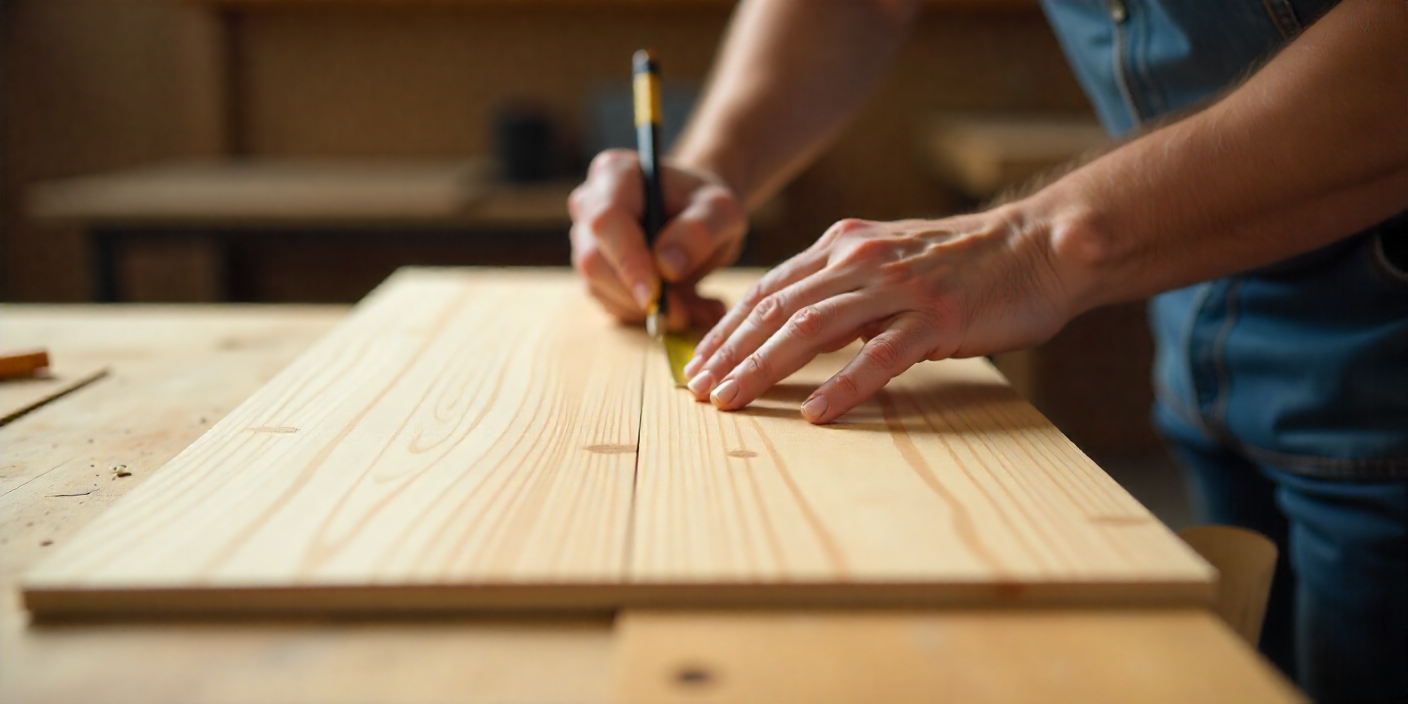
Measuring plywood correctly is one of the most important steps when planning any furniture or carpentry project. Accurate measurements help you avoid running out of material, reduce waste, and ensure every panel fits together perfectly. Whether you are building cabinets, tables, wardrobes, wall shelves, or custom panels, the quality of your final project depends heavily on how precisely you measure each piece before cutting.
While many people believe measuring plywood is as simple as writing down height and width, the reality is more detailed. Woodworkers know that even a small error in measurement can create alignment issues, visible gaps, or wasted plywood sheets. This guide explains the proper method for taking measurements, calculating panel sizes, accounting for grain direction, and preparing layouts like a professional carpenter.
- Start With the Exact Furniture Dimensions
- Transfer Furniture Dimensions Into Panel Measurements
- Measure in Straight Lines and Avoid Curved or Rounded Edges
- Understand Grain Direction Before Measuring
- Account for Cutting Loss and Kerf
- Combine All Panel Measurements to Estimate Total Material Needs
- Use the Polywood Calculator for Quick Measurement Conversion
- Prepare a Cutting Layout for Maximum Efficiency
- Double-Check All Measurements Before Cutting
- Final Thoughts
Start With the Exact Furniture Dimensions
Before touching a plywood sheet, you must know the exact size of the furniture you’re building. This includes total height, width, depth, and the number of pieces required. Furniture such as cabinets or wardrobes consist of multiple panels, all working together structurally, so every measurement must be consistent.
For example, a simple cabinet may include:
– A top panel
– A bottom panel
– Two side panels
– A back panel
– Shelves
– Doors
Even though this list seems basic, each part has its own width, height, and grain orientation. When you write down these measurements, ensure you convert everything into the same unit. Measuring one panel in inches and another in feet often leads to mistakes and re-cutting, which wastes time and plywood.
Transfer Furniture Dimensions Into Panel Measurements
Once you know the overall furniture size, the next step is translating those dimensions into the exact measurements of each plywood panel. This is where planning becomes important. If your cabinet is 60 inches tall, 30 inches wide, and 16 inches deep, the two side panels will be 60 × 16 inches each. The top and bottom panels will be 30 × 16 inches each, and the back panel will match the full width and height.
The most common mistake people make is not accounting for plywood thickness. For example, if you’re using 3/4-inch plywood, the interior width or depth of the furniture may change slightly depending on how the panels connect. Carpenters usually decide whether the sides overlap the top, or the top overlaps the sides. This affects your measurements, so planning the joinery method ahead of time prevents errors during cutting.
Measure in Straight Lines and Avoid Curved or Rounded Edges
When working with plywood, always measure in straight, clean lines. Even factory edges may contain minor imperfections, so professionals typically start measurements from a clean corner. Plywood sheets can sometimes bow slightly, especially in humid environments, so checking for straightness is also important before marking cuts.
If your furniture requires rounded corners or decorative shapes, measure the maximum rectangle first, then mark the shape inside it. This ensures you do not underestimate the material needed for curved details.
Understand Grain Direction Before Measuring
Plywood has a visible grain pattern, and grain direction matters for both strength and appearance. In furniture making, vertical panels usually follow a vertical grain, while horizontal surfaces follow a horizontal grain. This affects how panels must be cut from a sheet.
For example, doors with vertical grain cannot simply be rotated during cutting to save space. Professionals always plan the layout to preserve grain alignment. When you measure panels, note the grain direction next to the dimensions so you don’t forget this requirement during cutting.
Account for Cutting Loss and Kerf
Another detail beginners overlook is kerf—the thickness of the saw blade. Every cut removes a thin strip of plywood, usually around 1/8 inch. If you are cutting multiple pieces from the same sheet, kerf adds up quickly.
When measuring, always add a small margin to prevent a piece from becoming accidentally undersized due to repeated cuts. This small adjustment protects your accuracy and reduces wasted material.
Combine All Panel Measurements to Estimate Total Material Needs
After measuring each panel individually, add the square footage or square meters of all the panels to understand how much plywood your entire project requires. This will help you avoid purchasing too few sheets.
For a complete calculation guide, you can read how to calculate polywood sheets here:
👉 https://anycalctool.com/how-to-calculate-plywood-sheets-for-any-project/
This detailed reference explains the full formula for estimating sheet requirements, including waste factor and cutting layout strategies.
Use the Polywood Calculator for Quick Measurement Conversion
Even if your measurements are correct, manually calculating how many plywood sheets you need can still be time-consuming. That’s why carpenters and DIY builders often rely on tools to speed up the process. You can use the free polywood calculator here:
👉 https://anycalctool.com/plywood-calculator/
This tool helps convert your panel measurements into sheet counts automatically. Simply enter your dimensions, choose your sheet size, adjust the waste percentage, and get instant results. It prevents calculation mistakes and gives you confidence when purchasing your materials.
Prepare a Cutting Layout for Maximum Efficiency
A cutting layout shows how each furniture panel will be placed on the plywood sheet before cutting. Even with perfect measurements, poor layout planning often causes unnecessary waste. Professionals usually sketch the sheet and arrange the pieces carefully to fit as many panels as possible. Remember to keep grain direction consistent and leave space for kerf between cuts.
When your cutting layout is planned properly, you may need fewer sheets than expected, which helps reduce cost—especially for larger furniture pieces or multiple units.
Double-Check All Measurements Before Cutting
Every experienced carpenter knows that one wrong measurement can ruin a project. Before making the first cut, review your measurements twice. Place your tape measure at the correct edge, confirm grain direction, and ensure the marking line is clear and straight. This simple habit reduces material waste and ensures the final assembly fits together precisely.
Final Thoughts
Measuring plywood for furniture and carpentry is a skill that improves with experience, but the core principles stay the same: measure accurately, plan the layout, account for grain, include kerf, and double-check everything before cutting. Understanding these fundamentals ensures your panels fit together properly and your final furniture piece looks clean, strong, and professional.
Proper measurement is also the foundation of accurate sheet estimation. If you want to calculate how many sheets to buy, you can read the full guide on how to calculate polywood sheets using this link:
👉 https://anycalctool.com/how-to-calculate-plywood-sheets-for-any-project/
And for fast, accurate estimation, try the polywood calculator here:
👉 https://anycalctool.com/plywood-calculator/
With the right measurement techniques and the support of accurate tools, you can build any furniture project confidently and efficiently.